Flash flooding is the sharpest weather threat at Natural Bridges National Monument, with the county recording 2 flash flood events alongside 2 tornado and 2 thunderstorm wind incidents in recent data. The monument's canyon terrain funnels runoff fast and without warning, turning dry washes into rushing water well before storm clouds appear overhead. Afternoon monsoon buildups between July and September are the most common trigger.
Before entering any canyon or bridge trail, check the National Weather Service forecast for San Juan County and look upstream, not just at the sky directly above you — storms miles away can send water your way without warning. Carry a weather radio or download an offline alert app since cell service is unreliable here. If you're camping, pitch your tent on high ground well away from wash bottoms, and keep your footwear and a dry bag accessible inside the tent rather than stored outside.
Top recorded hazards in San Juan County
County dataFrom NOAA Storm Events (2024). Counts of recorded incidents — not all occurred at this park.
- Hail 3
- Flash Flood 2
- Tornado 2
- Thunderstorm Wind 2
Gear keyed to this park's risks
Recommendations driven by the actual hazards above. As an Amazon Associate we earn from qualifying purchases.
Own this campground? Get featured.
Premium listing slots for verified owners — show photos, amenity details, and direct booking links above the standard data card. Drop your contact info and we'll reach out.
About Natural Bridges National Monument
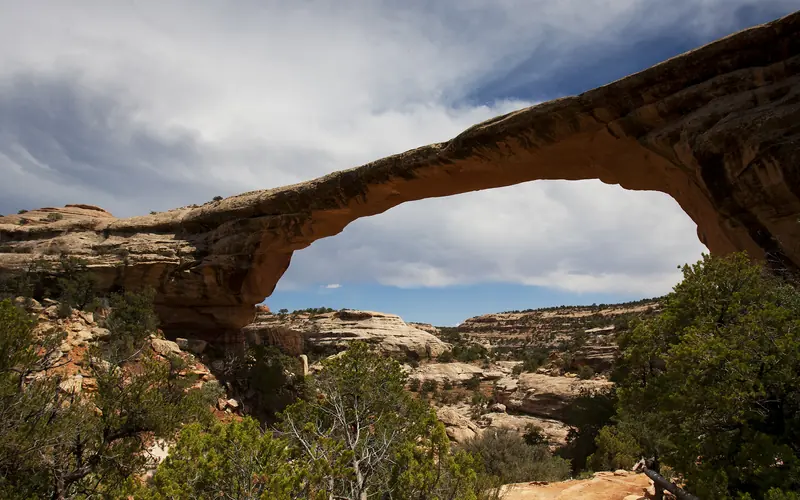
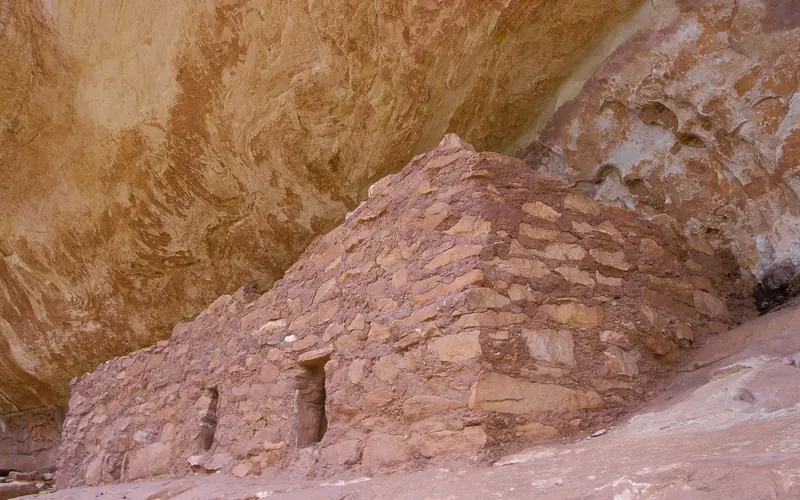
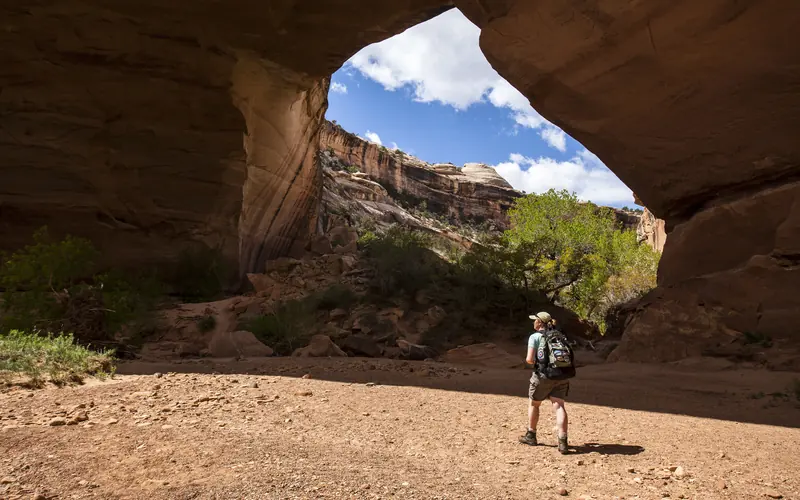
Three majestic natural bridges invite you to ponder the power of water in a landscape usually defined by its absence. View them from an overlook, or hit the trails and experience their grandeur from below. Declared a National Monument in 1908, the bridges are named "Kachina," "Owachomo" and "Sipapu" in honor of the Ancestral Puebloans who once made this place their home.
Weather
Natural Bridges is part of the Colorado Plateau, a "high desert" region that experiences wide temperature fluctuations, sometimes over 40 degrees in a single day. The temperate (and most popular) seasons are spring (April-May) and fall (mid-September-October), when daytime highs average 60 to 80 F and lows average 30 to 50 F. Summer temperatures often exceed 100 F, making strenuous exercise difficult. Winters are cold, with highs averaging 30 to 50 F, and lows averaging 0 to 20 F.