Flash flooding is the sharpest hazard facing campers in Canyonlands' canyon country, with 2 recorded flash flood events joining 2 tornado and 2 thunderstorm wind incidents in the county's recent data. The park's narrow slot canyons and slickrock drainages can funnel wall-to-wall floodwater within minutes of a storm that may be miles away and invisible from your campsite. A single upstream thunderstorm — and the data shows these are a real pattern here — is enough to turn a dry wash into a death trap.
Before setting up camp, check the NWS forecast for San Juan County specifically and identify your site's proximity to any wash, drainage, or canyon floor. Pack a battery-powered weather radio so you receive flash flood watches overnight when cell service is unreliable. If thunder rolls in, move immediately to high ground above the canyon rim rather than waiting to see water — by the time it's visible, retreat is often already impossible.
Top recorded hazards in San Juan County
County dataFrom NOAA Storm Events (2024). Counts of recorded incidents — not all occurred at this park.
- Hail 3
- Flash Flood 2
- Tornado 2
- Thunderstorm Wind 2
Gear keyed to this park's risks
Recommendations driven by the actual hazards above. As an Amazon Associate we earn from qualifying purchases.
Own this campground? Get featured.
Premium listing slots for verified owners — show photos, amenity details, and direct booking links above the standard data card. Drop your contact info and we'll reach out.
About Canyonlands National Park
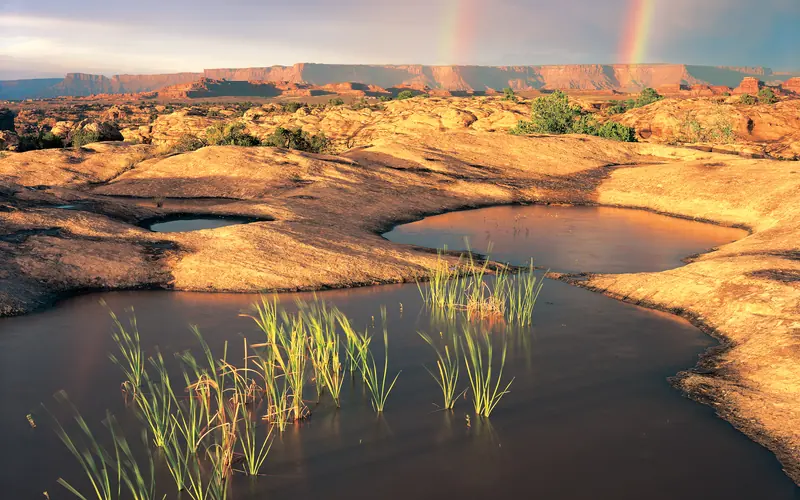
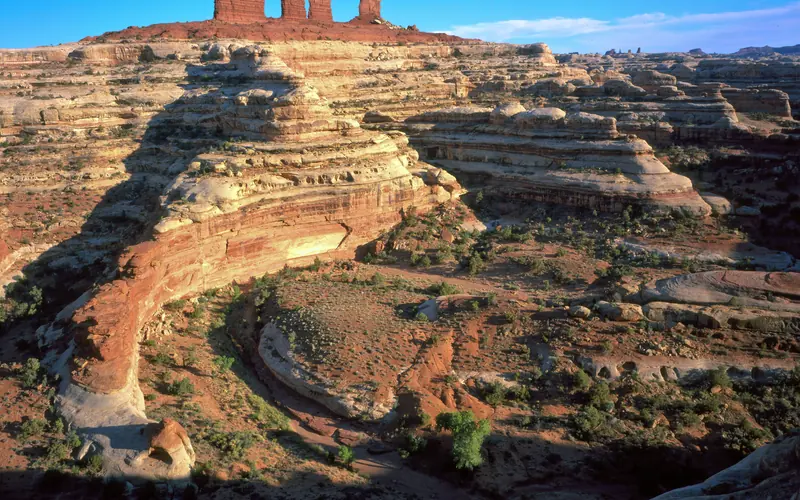
Canyonlands is a wilderness of canyons, buttes, and spires carved by the Colorado River and Green River. The park is divided into four distinct districts; no roads join them together. The districts share similar desert ecosystems, but each one provides unique opportunities for adventure and discovery.
Weather
Canyonlands is part of the Colorado Plateau, a "high desert" region that experiences wide temperature fluctuations, sometimes over 40 degrees in a single day. The temperate (and most popular) seasons are spring (April-May) and fall (mid-September-October), when daytime highs average 60 to 80 F and lows average 30 to 50 F. Summer temperatures often exceed 100 F, making strenuous exercise difficult. Winters are cold, with highs averaging 30 to 50 F, and lows averaging 0 to 20 F.