The biggest safety concern at Birmingham Civil Rights National Monument is the surrounding urban environment: Jefferson County recorded a violent crime rate of 404.7 per 100,000 residents in 2023, which is roughly three times the national average. This is a walkable, city-based monument in a dense downtown area, so situational awareness matters more here than at a remote wilderness park. Weather is a secondary but real factor, with 12 thunderstorm wind events and 4 flash flood incidents on record.
Keep valuables locked out of sight in your vehicle and park in well-lit, designated lots rather than side streets, especially after dark. If storms roll in — and afternoon thunderstorms are common in Alabama summers — move indoors immediately, as the monument's outdoor sites offer no shelter from lightning or sudden flooding along low-lying streets. Download a weather alert app like NOAA Weather Radar before your visit so you get real-time warnings while you're on foot.
Top recorded hazards in Jefferson County
County dataFrom NOAA Storm Events (2024). Counts of recorded incidents — not all occurred at this park.
- Thunderstorm Wind 12
- Hail 4
- Flash Flood 4
- Flood 1
Gear keyed to this park's risks
Recommendations driven by the actual hazards above. As an Amazon Associate we earn from qualifying purchases.
Own this campground? Get featured.
Premium listing slots for verified owners — show photos, amenity details, and direct booking links above the standard data card. Drop your contact info and we'll reach out.
About Birmingham Civil Rights National Monument
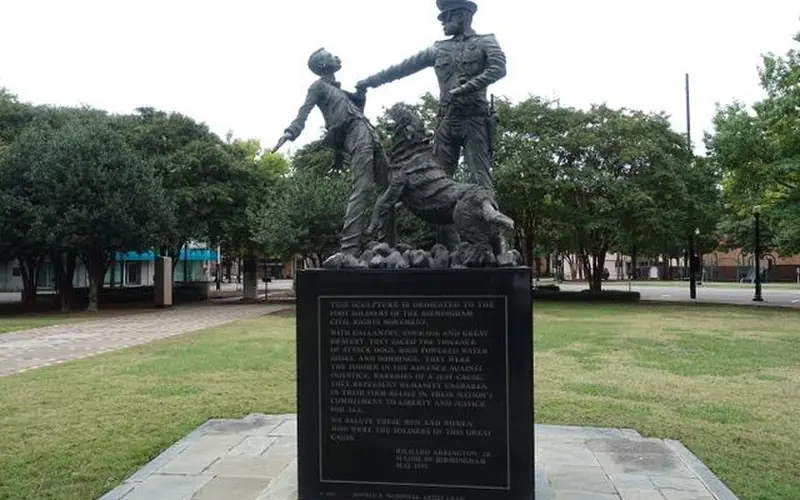
In 1963, images of snarling police dogs unleashed against non-violent protesters and of children being sprayed with high-pressure hoses appeared in print and television news around the world. These dramatic scenes of violent police aggression against civil rights protesters in Birmingham, Alabama were vivid examples of segregation and racial injustice in America.
Weather
Temperatures can soar to extremes of heat and humidity in the summer and fall to damp, wet, cold in the winter. Visitors should dress in comfortable clothing during the summer season, wear comfortable shoes, and use sunscreen. Drink plenty of fluids to maintain hydration. In the spring and fall, visitors should have a light jacket available as temperatures can drop suddenly. Winter temperatures can be unpredictable, ranging from mild to extremely cold.