Heavy rain is the dominant hazard at Castillo de San Marcos, with 9 recorded heavy-rain events in St. Johns County compounding 7 thunderstorm-wind incidents and multiple flood and flash-flood occurrences. The monument sits in coastal St. Augustine, where afternoon storms roll in fast and standing water can cut off low-lying streets and parking areas with little warning.
Before arriving, download a NOAA weather radar app and check it each morning — Florida's storm window typically opens between noon and 4 p.m. Pack a packable rain shell and waterproof shoes rather than sandals, since the fort's coquina walkways and surrounding grounds flood quickly. If thunder sounds, move inside the fort's casements or to your vehicle immediately, and delay driving until flash-flood alerts clear, as nearby streets along Matanzas Bay are prone to rapid inundation.


Top recorded hazards in St. Johns County
County dataFrom NOAA Storm Events (2024). Counts of recorded incidents — not all occurred at this park.
- Heavy Rain 9
- Thunderstorm Wind 7
- Flood 2
- Tornado 2
- Flash Flood 2
Gear keyed to this park's risks
Recommendations driven by the actual hazards above. As an Amazon Associate we earn from qualifying purchases.
Own this campground? Get featured.
Premium listing slots for verified owners — show photos, amenity details, and direct booking links above the standard data card. Drop your contact info and we'll reach out.
About Castillo de San Marcos National Monument
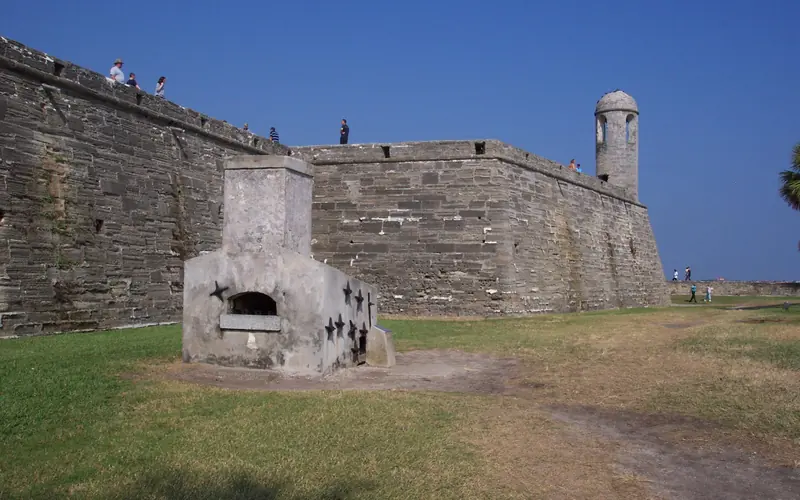
Built by the Spanish in St. Augustine to defend Florida and the Atlantic trade route, Castillo de San Marcos National Monument preserves the oldest masonry fortification in the continental United States and interprets more than 450 years of cultural intersections.
Weather
St. Augustine has a semi-tropical climate with over 300 days of sunshine each year. Summers (May-September) are hot, bright, and humid with afternoon thunderstorms common. Temperatures range from the lower 70s to the mid 90s F. Spring (March-mid-May) and Autumn (October-late November) can be pleasant with temperatures ranging from the upper 50s into the 80s F. The Winter months (December-March) are usually dry. Temperatures can be cool ranging from the upper 30s through the 60sF.