Heavy snow is the standout hazard at San Juan Island National Historical Park, with 90 recorded heavy-snow events leading all incident types in the state hazard data. Combined with 49 high-wind events and 42 thunderstorm-wind incidents, winter and shoulder-season visits carry real exposure to fast-moving, layered weather that can strand campers or damage equipment on the island's exposed terrain.
If you're visiting outside peak summer, pack tire chains or all-season tires for the ferry approach roads and keep a 48-hour supply of food and water in your rig in case high winds delay ferry service — a genuine possibility here. Secure your tent or RV awning before sleeping, since wind events often arrive overnight without much warning. Check the National Weather Service forecast for San Juan County specifically, as island conditions diverge sharply from mainland Seattle readings.

Top recorded hazards in Washington
State dataFrom NOAA Storm Events (2024). Counts of recorded incidents — not all occurred at this park.
- Heavy Snow 90
- High Wind 49
- Thunderstorm Wind 42
- Winter Weather 34
- Wildfire 25
- Frost/Freeze 22
Gear keyed to this park's risks
Recommendations driven by the actual hazards above. As an Amazon Associate we earn from qualifying purchases.
Own this campground? Get featured.
Premium listing slots for verified owners — show photos, amenity details, and direct booking links above the standard data card. Drop your contact info and we'll reach out.
About San Juan Island National Historical Park
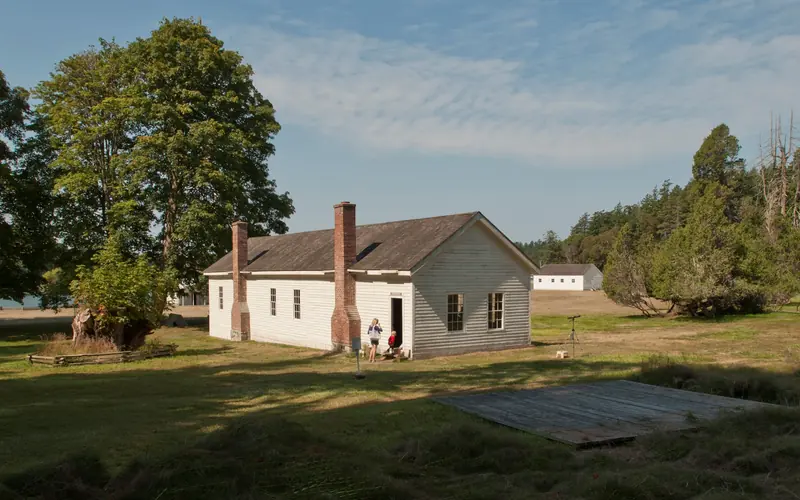
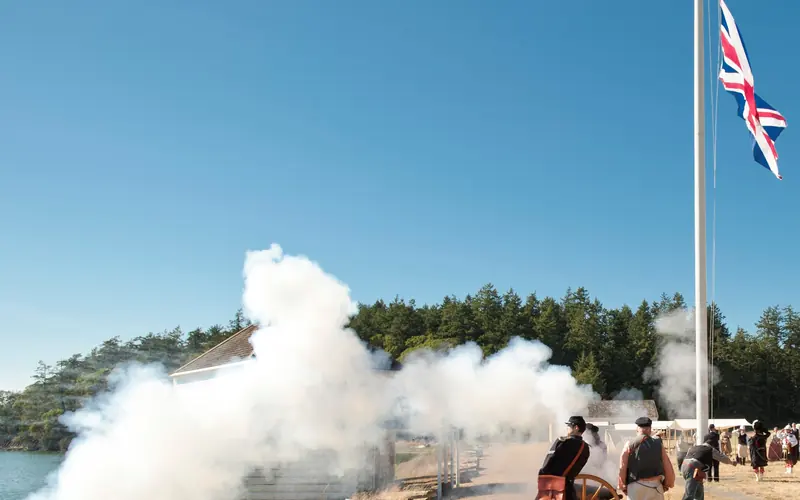
San Juan Island is well known for its splendid vistas, saltwater shores, quiet woodlands, orca whales and one of the last remaining native prairies in the Puget Sound/Northern Straits region. But it was also here in 1859 that the United States and Great Britain nearly went to war over possession of the island, the crisis ignited by the death of a pig.
Weather
Spring: Temperatures usually range from 40 F to 60 F. Wildflowers are at their peak around May. Summer: Temperatures usually range from 45 F to 70 F. On very sunny days, be prepared with water-heat exhaustion is a common complaint among park visitors who are unprepared. Fall: Temperatures usually range from 40 F to 65 F. Rain is common. Winter: Temperatures range from 35 F to 50 F. Be prepared with cold and wet weather gear and numerous layers if you intend to be outside. Rain and wind are common.