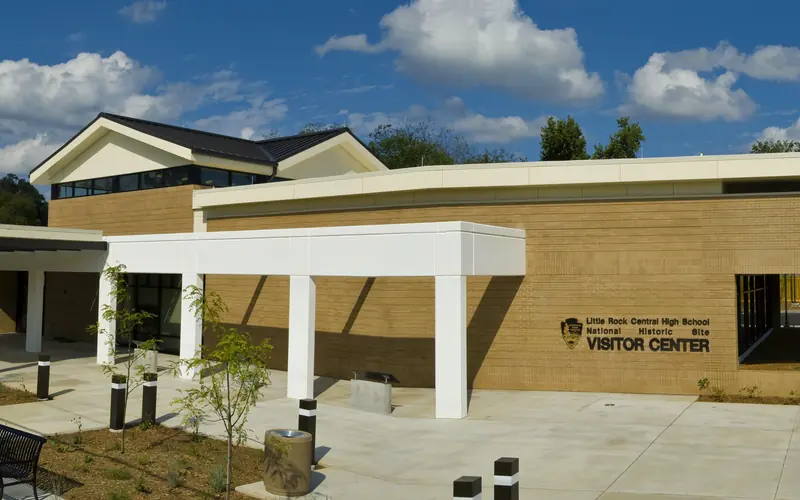
The dominant safety concern at this urban historic site is the surrounding neighborhood's violent crime rate, which reached 629.4 incidents per 100,000 residents in Pulaski County in 2023 — roughly double the national average. This is not a remote park with miles of buffer from city activity; the site sits directly within Little Rock's urban core, meaning visitors share the immediate environment with that crime landscape. Weather adds a secondary layer of risk, with 18 thunderstorm wind events and 11 flash flood incidents recorded in the county.
Plan your visit during daylight hours and return to your vehicle or lodging well before dark. Park in the designated, well-lit lot adjacent to the visitor center rather than on surrounding side streets. If thunderstorms are in the forecast, download a radar app like MyRadar before you arrive — flash flooding can move fast through urban drainage systems, and you'll want advance warning to move your vehicle to higher ground.
Top recorded hazards in Pulaski County
County dataFrom NOAA Storm Events (2024). Counts of recorded incidents — not all occurred at this park.
- Thunderstorm Wind 18
- Hail 13
- Flash Flood 11
- Heavy Rain 5
- Flood 1
Gear keyed to this park's risks
Recommendations driven by the actual hazards above. As an Amazon Associate we earn from qualifying purchases.
Own this campground? Get featured.
Premium listing slots for verified owners — show photos, amenity details, and direct booking links above the standard data card. Drop your contact info and we'll reach out.
About Little Rock Central High School National Historic Site
In 1957, Little Rock Central High School was the epicenter of confrontation and a catalyst for change as the fundamental test for the United States to enforce African American civil rights following Brown v. Board of Education. Learn how the sacrifice and struggle endured by the Little Rock Nine have provided opportunities and opened doors for those seeking education around the world.
Weather
Arkansas weather can change quickly. While the state is in a moderate temperate zone, it does experience strong thunderstorms, tornadoes and flash floods. In winter, "snow" events tend to quickly turn to thin ice which can be difficult to see and to clear. Summer temperatures and humidity can lead to dehydration, heat exhaustion and heat stroke. Visitors are advised to dress in layers and be prepared for precipitation. Average seasonal temperatures (°F): Spring: 62° Summer: 80° Fall: 63° Winter: 43°