Hail is the standout weather threat at Fort Larned, with 9 recorded hail events in Pawnee County — more than four times the frequency of any other hazard on record here. Thunderstorm wind events add a secondary concern, and the presence of a funnel cloud sighting confirms this is genuine tornado-corridor territory on the Kansas plains. Families should also note that Pawnee County's violent crime rate of 435.8 per 100,000 is meaningfully elevated, so situational awareness extends beyond the weather.
Before setting up camp, download a radar app like RadarScope so you can track fast-moving Great Plains storms in real time rather than relying on distant sirens. Store loose gear — chairs, canopies, and coolers — inside your vehicle or RV when afternoon clouds build, since hail and wind can arrive with little warning. For overnight stays, keep your car unlocked from the inside and valuables out of sight; parking in a well-lit, visible spot near other campers reduces opportunistic risk.
Top recorded hazards in Pawnee County
County dataFrom NOAA Storm Events (2024). Counts of recorded incidents — not all occurred at this park.
- Hail 9
- Thunderstorm Wind 2
- Funnel Cloud 1
- Heavy Rain 1
Gear keyed to this park's risks
Recommendations driven by the actual hazards above. As an Amazon Associate we earn from qualifying purchases.
Own this campground? Get featured.
Premium listing slots for verified owners — show photos, amenity details, and direct booking links above the standard data card. Drop your contact info and we'll reach out.
About Fort Larned National Historic Site
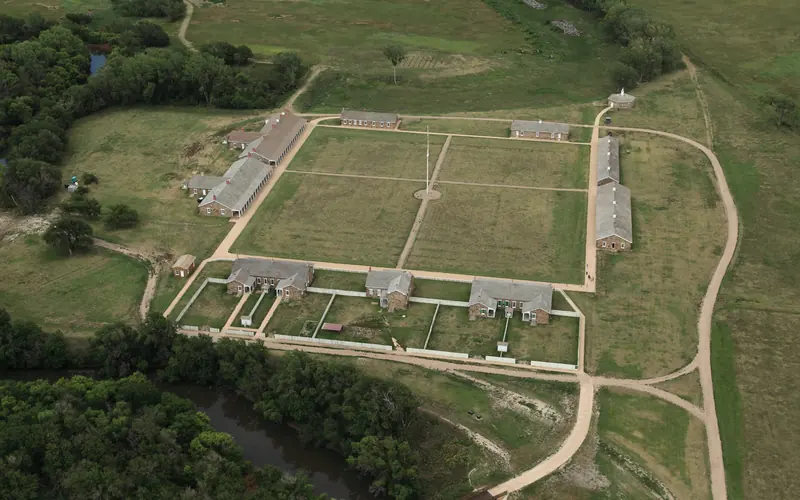
Discover a complete and authentic army post from the 1860s -1870s! This well-preserved fort on the Santa Fe Trail shares a tumultuous history of the Indian Wars era. The sandstone constructed buildings sheltered troops who were known as the Guardians of the Santa Fe Trail.
Weather
Central Kansas has a four-season climate. Winter tends to be cold and dry, with average daytime highs below 40F (4C). Foehn winds blowing across the Great Plains from the Southwest periodically raise temperatures above 80F (27C). Unsettled warmer air, higher winds, and severe weather arrive in the spring and often last through early July. Late summer days hover above 90F (32C) and readings over 100F (38C) are not uncommon. Fall is variable but generally milder with showers changing to snow and ice later.